
Exterior paint guide, part 3 of 4. See all four parts.
The same paint can succeed on one surface and fail on the next. Sheen and color are placement decisions.
Sheen by Surface
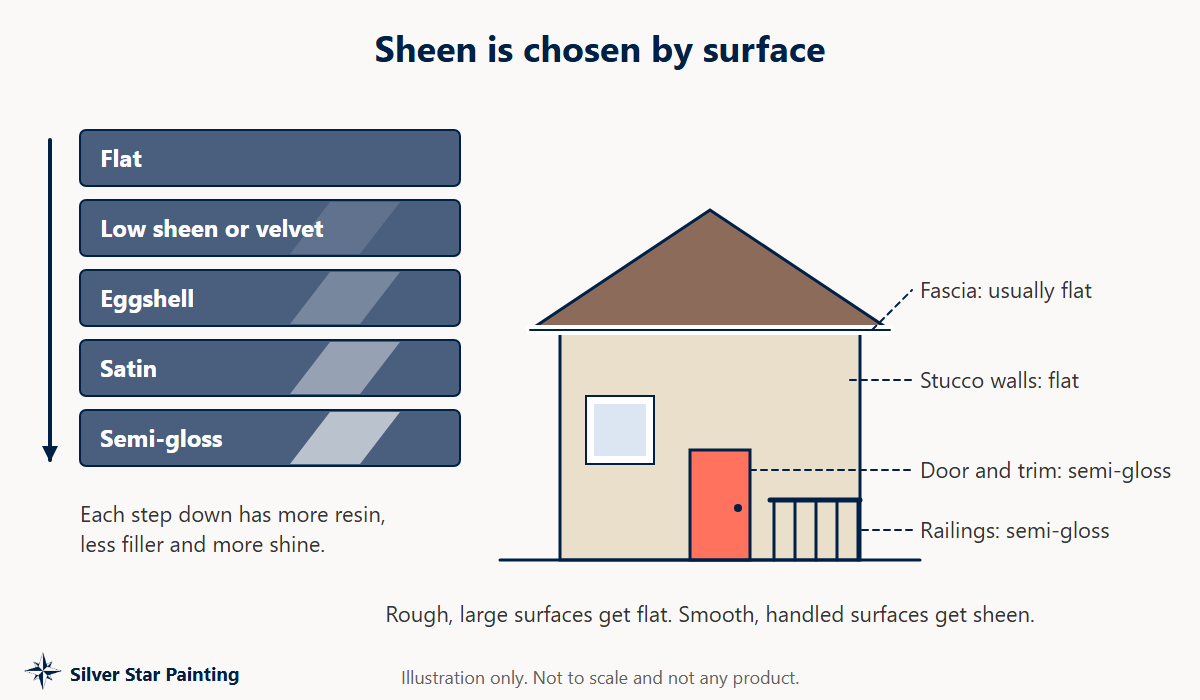 Sheen is how much light the dried film reflects, measured in gloss units under a fixed standard (ASTM D523). The ladder runs flat, low sheen, eggshell, satin, semi-gloss and gloss. A semi-gloss and a flat from the same product line are different formulas, not the same paint with the shine turned up: each step up carries more resin and less filler.
- Flat hides surface flaws and touches up invisibly. Shine shows every patch, texture change and roller lap when the sun rakes across a large wall, and a touch-up on a shiny wall stands out. That is why stucco walls are typically painted flat.
- Semi-gloss gives a denser film that is tougher where hands, hoses and water reach it. It sheds dirt, washes clean, absorbs less water and resists staining. That is why doors and trim are typically painted in semi-gloss.
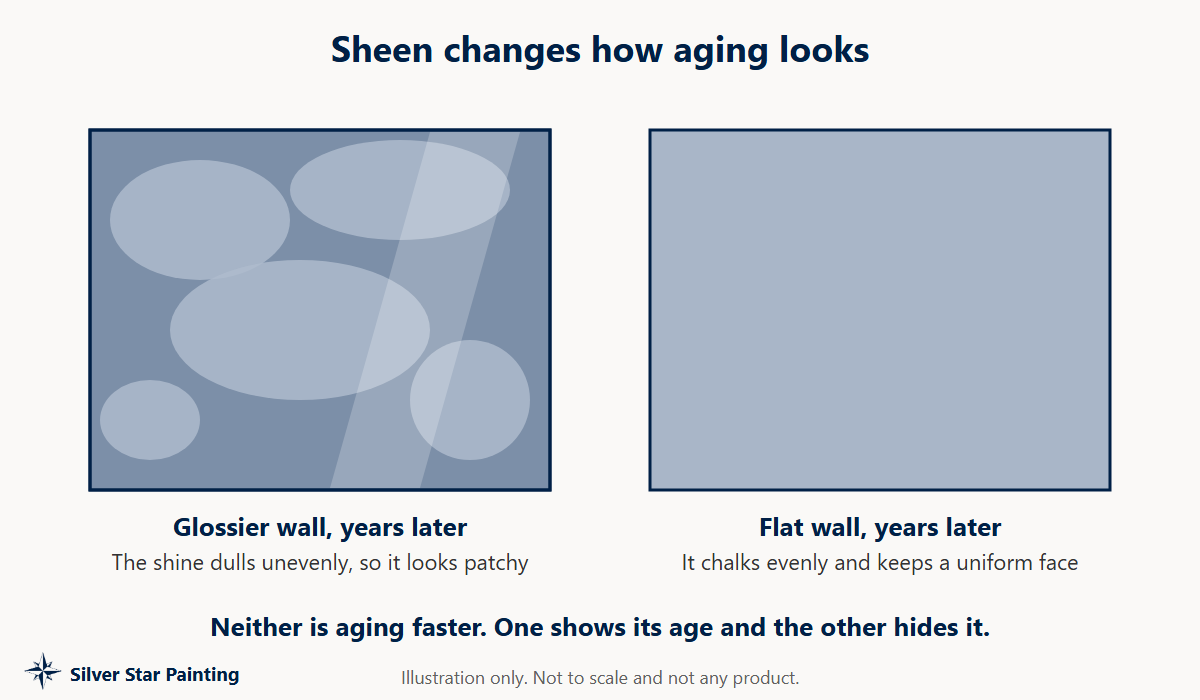 Sheen changes how aging looks, not how fast it happens. The sun works on the surface of every paint. On a glossy film the first thing lost is the shine, and it dulls unevenly, so a wall can look patchy while the coating underneath is still protecting. A flat film ages as even, gradual chalking and keeps a uniform face. One shows its age and the other hides it.
Flat has a price too. The open surface that hides flaws also holds dirt and takes up more water on shaded, sprinkler-wet walls.
Fascia can go either way. It is the most water-worked surface on the building, which argues for sheen. Painted flat, it ages in step with the walls and hides the texture of weathered wood. Either choice is sound if it is made on purpose.
A written specification should name the sheen for each surface as well as the product. Where each sheen belongs is our professional judgment; manufacturers publish which sheens exist, not where to put them.
What Makes a Color Fade
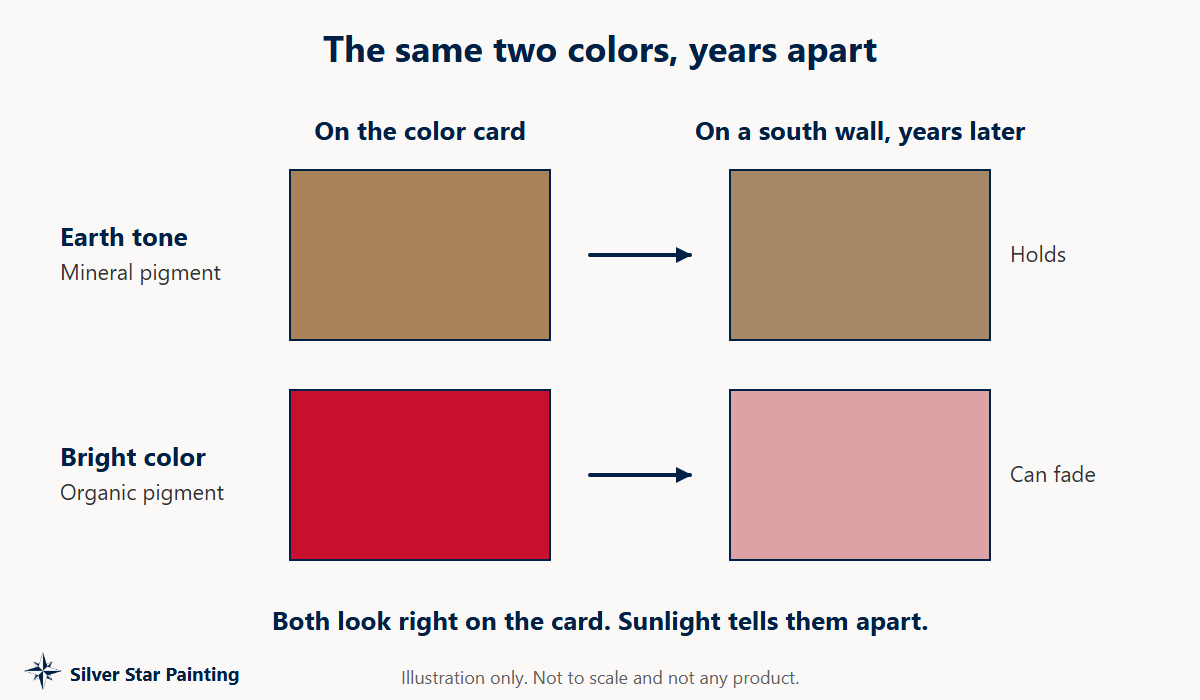 Color fade is driven more by the pigments in your color than by the name on the can. The same color built two ways can look identical on the color card and completely different on a south wall in year six.
- Earth-tone pigments (iron oxides and similar) are mineral crystals that hold their color in the sun for a long time. They cannot produce a brilliant red or a vivid violet.
- Bright, saturated colors rely on organic pigments, whose resistance to sunlight ranges from excellent to poor. Deep color bases also contain little or no titanium dioxide, so saturated colors are the least stable on any product.
- The tint base is not your worry. Every color is mixed into a base made for its depth, and the manufacturer’s computerized tinting system selects that base and measures the pigments. What you control is the color you choose.
The practical rule: stable colors on the large sunlit walls, and the bold colors on doors, trim and accents, where the area is small and a refresh is inexpensive.
For communities that repaint in phases, color retention is a scheduling matter. The buildings painted in the first year still have to match those painted in the third, and a wall that has begun to chalk will not match a fresh coat of the same color.
Not sure which color will hold up on your building? Our color consultation covers it.
Next: Part 4, maintenance periods.
Questions about the paint for your project? Contact us or call 951-780-4337. We are glad to discuss any of this, whether or not you have a project with us.